
How To Eat More Fiber In Menopause Without Tracking
If you’ve been hearing a lot about fiber lately, that makes two of us.
Fiber has become the latest “must-do” nutrition hack, especially for women in midlife and menopause. Influencers and the media tell us to add more, track more, and “optimize” our intake. I don’t know about you, but the fibermaxxing message lands as yet another thing to add to our to-do list in an already full season of life.
That’s why I recorded the Fiber Without the Fuss podcast episode, and share some of my tips and tricks for eating more fiber without turning it into a full-time job.
In this episode, I talk about why fiber has become such a hot topic, and why the way we’re being encouraged to approach (go big or go home) isn’t sustainable. Most women don’t need another number to set their sights on. What we need is a way of eating that takes capacity into consideration, and makes life easier, instead of more complicated.
A capsule wardrobe approach to fiber
Unlike some nutrition trends, fiber deserves its good reputation. It supports digestion, blood sugar regulation, cholesterol, and gut health. Many women notice changes in these during perimenopause and menopause, so it makes sense that fiber gets a lot of attention.
Where things go sideways is how we are told to approach it.
Most fiber advice today follows a “go big or go home” mindset. Count grams, add supplements, and overhaul your entire pantry. It treats fiber like a performance metric.
That approach ignores capacity, something I consider essential because capacity changes in midlife.
Energy and motivation fluctuate. And, stress, sleep disruption, caregiving, work, and life shape what’s realistic. If a nutrition strategy requires more capacity than you have, it’s not going to work.
That is why fiber without tracking in menopause matters so much.
I’m all about making menopause nutrition easy, which is why I use a capsule wardrobe framework to teach women in menopause about nutrition. Instead of trying to do everything, you focus on a few reliable foundations that work well together. When those pieces are in place, nutrients like fiber are naturally a good fit because they’re versatile and useful items that help manage symptoms such as hot flashes and bloating, while keeping our cholesterol, blood sugar and heart disease risk in check.
I often call fiber the LBD, the little black dress of menopause nutrition.
It works in almost any situation.
You can dress it up or dress it down.
And when you pair it with protein, for example, meals tend to feel more filling and steady.
The goal is to choose fiber-rich foods you enjoy, in ways that fit your real life.
This isn’t about perfection. It is about design.
Fiber without tracking in menopause looks like this
Eating more fiber can be simple, especially when it adds to meals you already enjoy! That is what fiber without tracking in menopause actually looks like.
Think:
Adding 1/2 cup of berries or fruit to breakfast adds ~3-5 grams, depending on the fruit.
Throwing in 1 cup of beans to a soup or salad adds ~12-15 grams.
Seeds on toast offer fiber and crunch!
Oats can blended into a smoothie, and 1/2 cup provides ~4 grams of soluble fiber.
Edamame works as a snack or the main character in a meal, and includes protein, phytoestrogens and omega-3s too.
These choices support fiber intake without turning eating into a project.
Mediterranean Salmon Smash with Hummus & Edamame
I know, I know, using hummus instead of mayo sounds like the kind of “healthy swap” you’d expect from diet culture. But as I share in this podcast, I was pleasantly surprised to accidentally discover that I loved it. That’s what inspired this super quick and easy recipe.
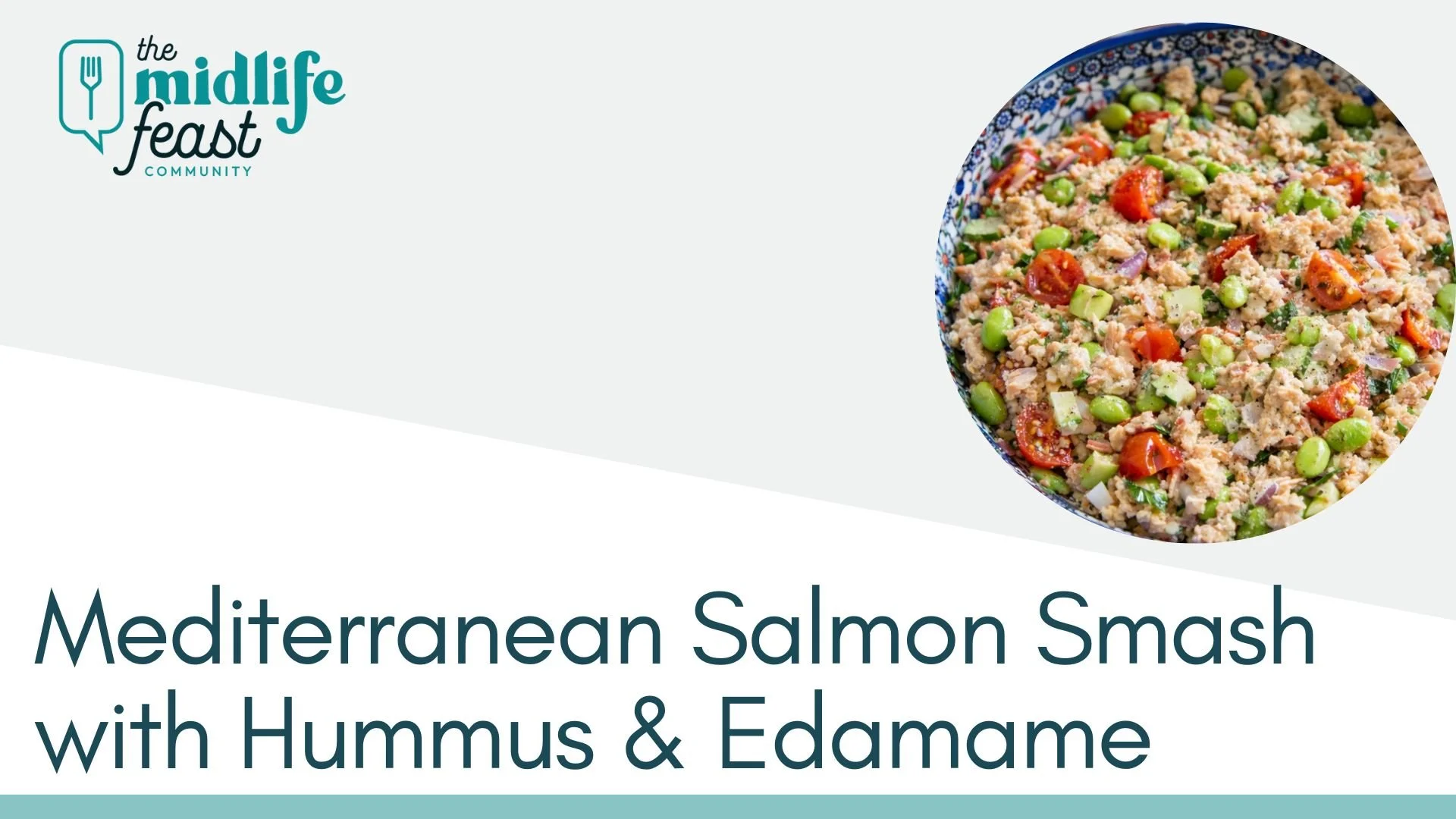
Make this Salmon Smash recipe for a quick weekday meal
It’s also a great addition to your menopause nutrition capsule wardrobe because in addition to fiber, it’s provides other key nutrients including phytoestrogens, protein, calcium and omega-3s.
Ingredients:
1 -5.5 oz (170 g) canned salmon
2 tablespoons of red onion, diced
2 tablespoons of cucumber, diced
6-8 cherry tomatoes, quartered
2 tablespoons of fresh parsley, chopped
2 heaping tablespoons of hummus
½ cup (85g) of edamame beans
1 small lemon, juiced
Salt and pepper
Pita bread or crackers for serving
Directions:
Drain the canned salmon and flake it into a medium bowl.
Add the red onion, cucumber, cherry tomatoes and parsley.
Add the hummus and mix with a spoon before folding in the edamame beans.
Add the lemon juice and season with salt and pepper.
Gently mix until everything is just combined. Taste and adjust seasoning if needed.
Serve with pita bread or crackers.
Refrigerate leftovers in a covered dish and enjoy for a quick lunch.
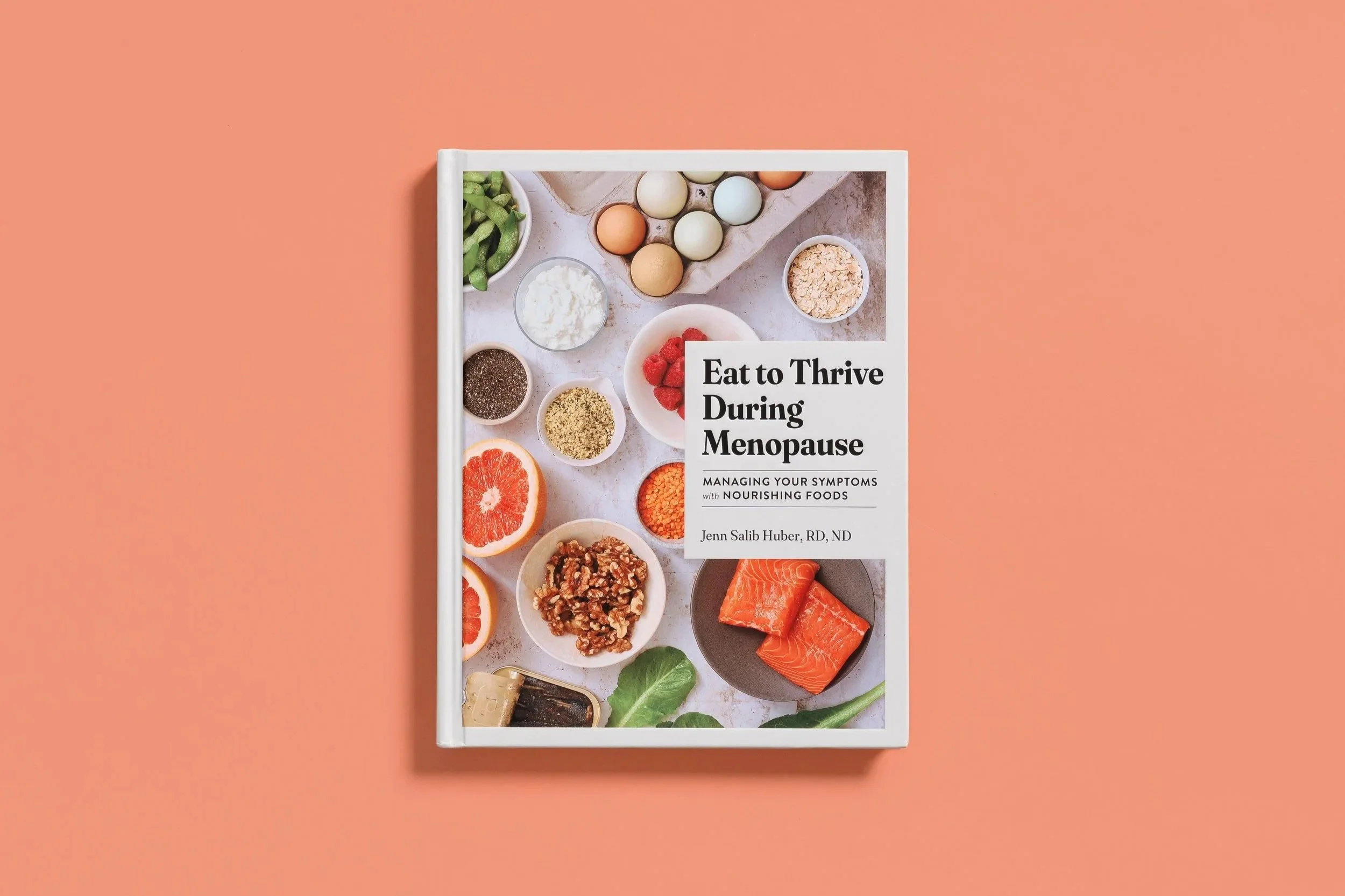
Manage Your Symptoms With Nourishing Foods
If you want a framework for eating well in perimenopause and menopause without rules or restriction, my book Eat to Thrive in Menopause does exactly that. It blends the science of menopause nutrition with the wisdom of intuitive eating.